
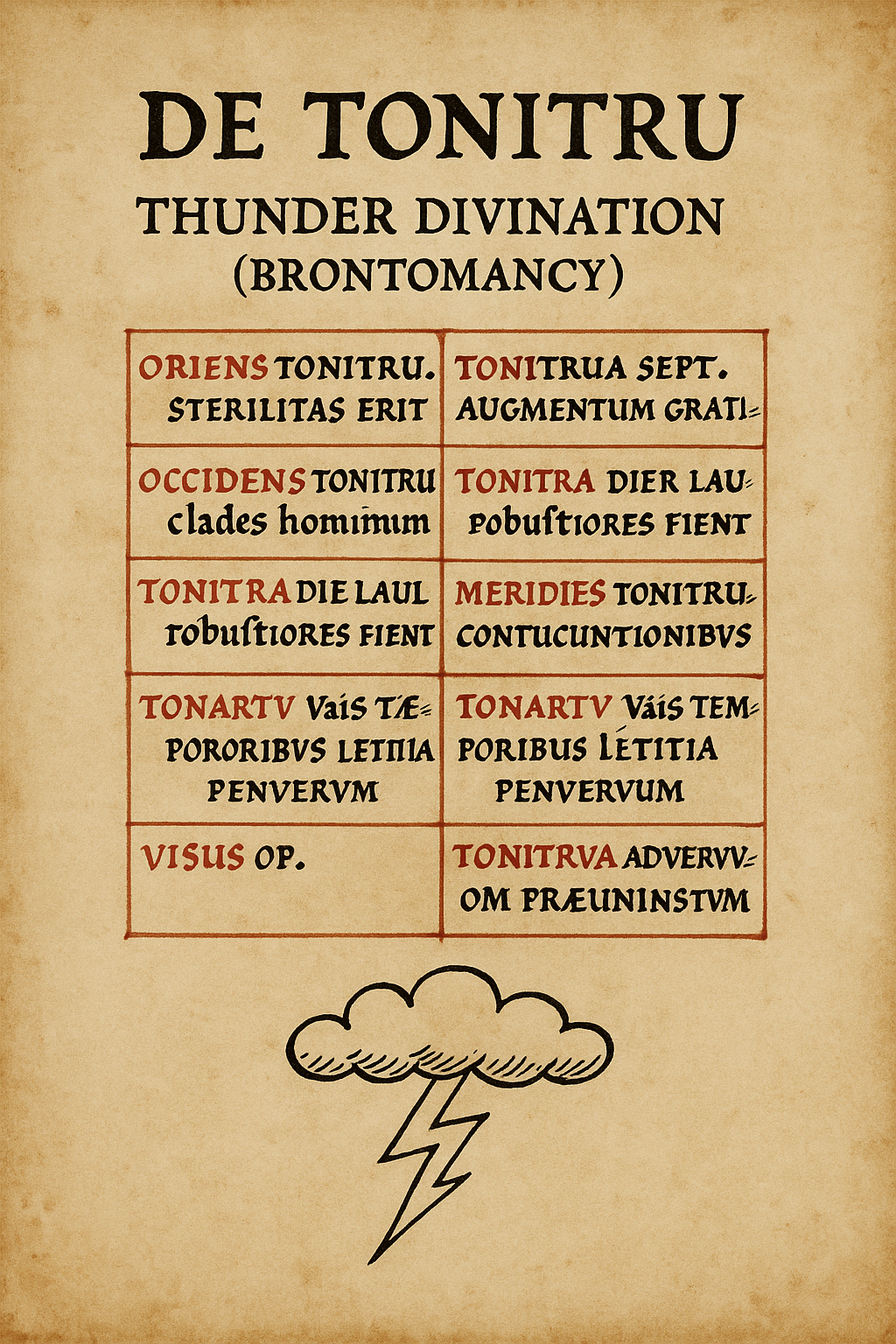
Scene: Sylvia’s Kitchen, Falmouth — Late Afternoon
The rain had come in off the sea, needling against the windows. The kitchen smelled of salt and damp wool, and the kettle’s hiss filled the pauses between thunder. Lillian sat at the table, her papers spread wide, pages ruffling in the draught that slipped beneath the door.
Lillian:
It’s remarkable how systematic it all was. These brontologia — thunder charts, they called them — appear in manuscripts from Byzantium through the twelfth century. Each thunderclap was recorded, correlated with a date, a planetary ruler, even a prediction. “If it thunder on the fifth of April, expect conflict among kings.” Utterly medieval.
Sylvia:
(chuckling softly as she pours the tea)
Medieval, is it? You’d best tell the lads down at the quay, then. They’ve been using the thunder chart longer than I’ve had this kettle.
Lillian:
Surely not in any literal sense?
Sylvia:
Oh, I wouldn’t say literal — though they’d take offence at the word. When thunder rolls out to sea, they listen. Not just to how long it grumbles, but when it comes. If it breaks before dawn, it’s a warning: storms, sickness, maybe worse. After sunset’s luckier — means the wind’ll turn fair or the catch’ll come in easy.
Lillian:
That’s folk meteorology, not divination.
Sylvia:
(smiling, eyes glinting)
You academics do love your tidy lines. But to them it’s both. The sky speaks plain, if you’ve the sense to listen. There’s a rhyme, though nobody writes it down anymore:
Thunder before midsummer’s day,
Brings sorrow close, drives luck away;
Thunder after harvest’s done,
Brings peace to hearth and a sleeping sun.
Lillian:
You make it sound almost… liturgical.
Sylvia:
Aye. It is, in its way. Natural scripture, Jonathan used to call it — the Book of the Sky. When the heavens speak, the wise listen.
Lillian:
(quietly, jotting in her notebook)
The Book of the Sky. It’s extraordinary, Sylvia — I’ve been tracing these same patterns in Byzantine manuscripts, and here you are telling me they’ve survived in Falmouth.
Sylvia:
Aye. You scholars dig in libraries; we just look up. Doesn’t matter if it’s Greek or Cornish — thunder still carries meaning if you’ve the ears for it. The sea folk never let it go. You see, Lil — this isn’t ancient. It’s alive.
The kettle clicked off. The air, dense with steam, trembled faintly as thunder rolled across the bay — long, deliberate, as though it were thinking.
Lillian sat back, the ink on her notes gleaming faintly in the half-light. Alive. The word settled somewhere behind her ribs. For years she’d studied divination as artifact — a collection of symbols pressed flat beneath the weight of centuries. Yet here it was, not in a manuscript but in the air, in the rhythm of the rain, in Sylvia’s unhurried certainty.
A loose page fluttered; a streak of lightning flashed across her note — brontologia: divine acoustics? — just as the thunder followed, almost answering.
Sylvia looked toward the sound, then at her.
“West wind,” she said softly. “Good news. Means change, but the kind that carries you home.”
Lillian nodded, though she wasn’t sure which of them she was agreeing with. The thunder rumbled again, closer this time, and for a heartbeat it sounded almost like speech.
Notebook of L. Hartley — 14 October 2025
Sylvia says the thunder speaks, and perhaps it does. The sound tonight had structure, like a phrase begun but never finished. I wrote “divine acoustics?” and at that moment the lightning illuminated the word as if to underline it. I do not believe in omens, but it is strange how the air feels when meaning wants to be found.
The old texts call thunder “the voice of the firmament.” If that’s true, I may have heard it breathe.
West wind rising. Note: change often begins with noise.
Leave a Reply