
The Story
Retired carpenter Mr Hargrove, a proud and meticulous craftsman, sparked controversy in Woodbridge when he announced his plans to donate his beloved wooden garden benches to the local park.
He took great pride in his creations, even if they were old and worn out. But as his longtime friends who managed the park eagerly accepted his offer, murmurs of concern arose from the neighbourhood residents who doubted the benches’ suitability and sustainability. Was this a generous act of kindness or a selfish move that would ultimately harm the community? The town was divided, and tensions rose as the donation date approached.
Winter came harshly, and by spring, the effects were evident. Several slats on both benches broke, revealing rusty nails and jagged edges. Complaints from the community grew louder, but the park wardens, unwilling to upset their chum, did nothing.
By Easter, the situation worsened. The rusty nails protruded dangerously. Still, the benches remained. One sunny afternoon, a group of out-of-town parents brought their children to the park. The kids noticed the benches and began jumping on them.
With a loud crack, one of the benches collapsed under their weight, sending a seven-year-old tumbling. The child was seriously injured, and panic spread through the park. Furious and seeking justice, the distraught parents immediately demanded action from the town council.
The park wardens panicked, realising the gravity of the situation and their complicity. They forged paperwork, hastily creating a document that stated Mr. Hargrove’s donation was accepted on the strict condition that he maintained the benches. The document claimed that Mr Hargrove had failed to uphold this responsibility, deflecting the blame onto him.
When the parents discovered this, their anger turned towards Mr Hargrove. Legal papers were served, and Mr Hargrove found himself at the centre of a maelstrom. His imagined superior generosity had backfired spectacularly. He protested his innocence, claiming he was never informed of any maintenance condition.
As the case went to court, surprising truths emerged. Despite numerous complaints, witnesses from the neighbourhood testified about the park wardens’ reluctance to act. The forged documents were scrutinised and found to be fraudulent. The park wardens’ deceit was exposed, and they were held accountable for their negligence and falsification.
Mr Hargrove, though spared the worst of the legal repercussions, was not unscathed. His reputation was tarnished, and the realisation of his misguided pride weighed heavily on him. The court ordered him to compensate the injured child’s family, a sum that strained his modest savings.
The town council faced significant backlash, and the community demanded sweeping changes. The park wardens were dismissed, and new regulations were implemented to ensure such negligence would never happen again.
The incident served as a harsh lesson for Mr Hargrove.
As the legal proceedings drew close and the townsfolk began to drift away from the courthouse, whispers rippled through the crowd. Mr Hargrove, once the centre of attention for all the wrong reasons, now garnered a different kind of interest. The sun was dipping low, casting long shadows across Woodbridge, mirroring the sombre mood that had settled over the once lively town.
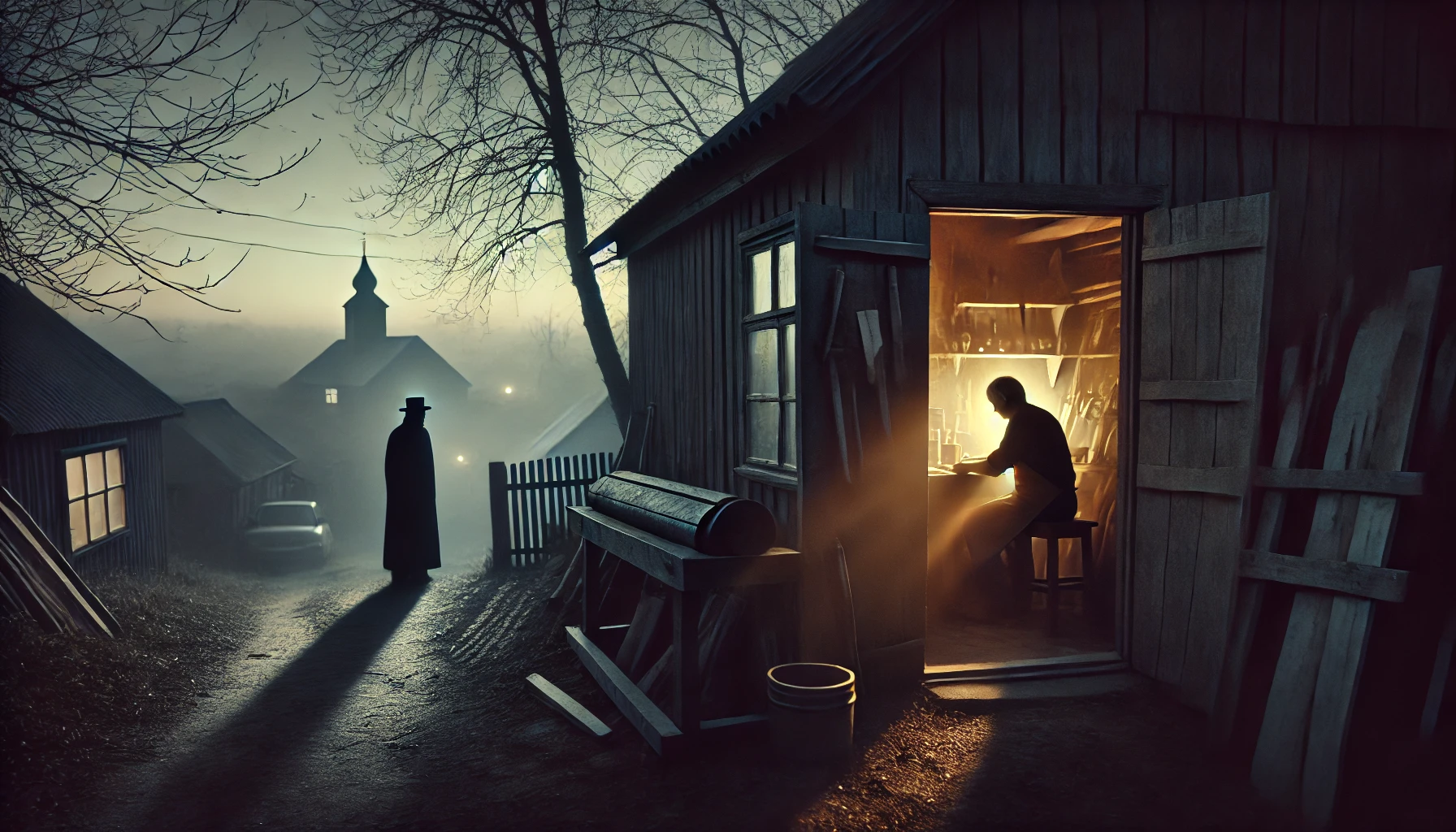
That evening, as the last hint of daylight vanished, a soft glow emanated from Mr Hargrove’s workshop. The sound of sawing and hammering pierced through the silence, suggesting a man atoning in the only way he knew how. The townspeople watched from a distance, their curiosity piqued but their judgment reserved.
And then, under the cloak of nightfall, an unexpected visitor arrived at Mr Hargrove’s doorstep, a shadowy figure whose presence promised new revelations and perhaps a chance for redemption or further turmoil. As they exchanged hushed words, it became clear that this was not just an end but a new beginning – of what kind, no one could say.
The Review
In this tantalizing excerpt from what promises to be a gripping narrative, the author skillfully navigates the treacherous waters of human pride and societal expectations. Reminiscent of classic morality tales, the passage unfolds with an almost Dickensian flair, painting a vivid portrait of a once-proud craftsman whose well-intentioned gesture spirals into a cautionary tale for our modern age.
The allegorical weight of Mr Hargrove’s ill-fated donation resonates deeply against the backdrop of contemporary society, where unintended consequences can often overshadow altruism. As we witness the collision of individual hubris and communal responsibility, echoes of Greek tragedy reverberate through the quiet streets of Woodbridge, underscoring the timeless tension between personal ambition and collective welfare.
Moreover, the nuanced exploration of accountability and redemption in the face of adversity adds layers of complexity to the narrative, elevating it beyond mere storytelling into a profound reflection on human nature itself. With shades of Hawthorne’s moral ambiguity and Faulkner’s intricate character studies, the author deftly navigates the delicate balance between empathy and judgment, leaving readers grappling with their own preconceptions and biases.
As the shadows lengthen over Woodbridge and Mr Hargrove’s workshop hums with the promise of transformation, one cannot help but marvel at the author’s ability to blend social commentary with riveting drama. This is more than just a tale of one man’s misstep; it is a mirror held up to society, challenging us to confront our shortcomings and seek redemption in the face of adversity.
In sum, this excerpt from what appears to be a forthcoming literary gem serves as a potent reminder that beneath every seemingly mundane gesture lies a web of complexities waiting to be unraveled. With its rich tapestry of themes and masterful storytelling technique, this book holds great promise for those seeking not just entertainment, but enlightenment through fiction.
Leave a Reply