
A Study by Lillian Hartley
If there’s one thing I’ve learned in a lifetime of studying human belief systems, it’s this: people crave patterns. We tell stories to structure the unknown, to impose meaning on chaos, to convince ourselves that life follows some deeper order. Even those who don’t believe in fate still walk its pathways, unaware of the roads mapped out beneath their feet.
Thomas Hardy understood this. His novels, though driven by social constraints, human folly, and misfortune, are deeply rhythmic, unfolding in time with the natural world’s cycles. The changing seasons don’t just mark time in Hardy’s fiction; they shape the very destinies of his characters. The more I look, the clearer it becomes: Hardy’s major works open in alignment with the ancient Wheel of the Year, the cycle of festivals that once structured pagan England’s relationship with the land, life, and death. Whether he meant to or not, Hardy’s narratives reinforce one of the most enduring human instincts—the belief that our lives are woven into something older than ourselves.
Beltane and the Dance of Fate: Tess of the d’Urbervilles 🌿🔥
Hardy opens Tess of the d’Urbervilles on May Day (Beltane, May 1st)—a festival of fertility, youth, and new beginnings. Tess, clad in white, dances with the other village girls in a scene laden with ritual significance. At that moment, she is innocent, untouched by the fate that will soon unravel before her. Angel Clare sees her but doesn’t choose her—a seemingly trivial moment that, in hindsight, feels predestined.
Why this matters:
- Beltane is about thresholds, standing at the edge of change.
- Tess, though unaware, is stepping into a story much older than herself—one that will sacrifice her to fate.
- The festival’s themes of fertility and desire foreshadow the forces that will dictate her future, for better or worse.
Hardy’s choice to place Tess’s first appearance at Beltane isn’t just historical realism—it’s a narrative omen.
Samhain and the Shadow of Inevitability: The Return of the Native 🍂🔥🌑
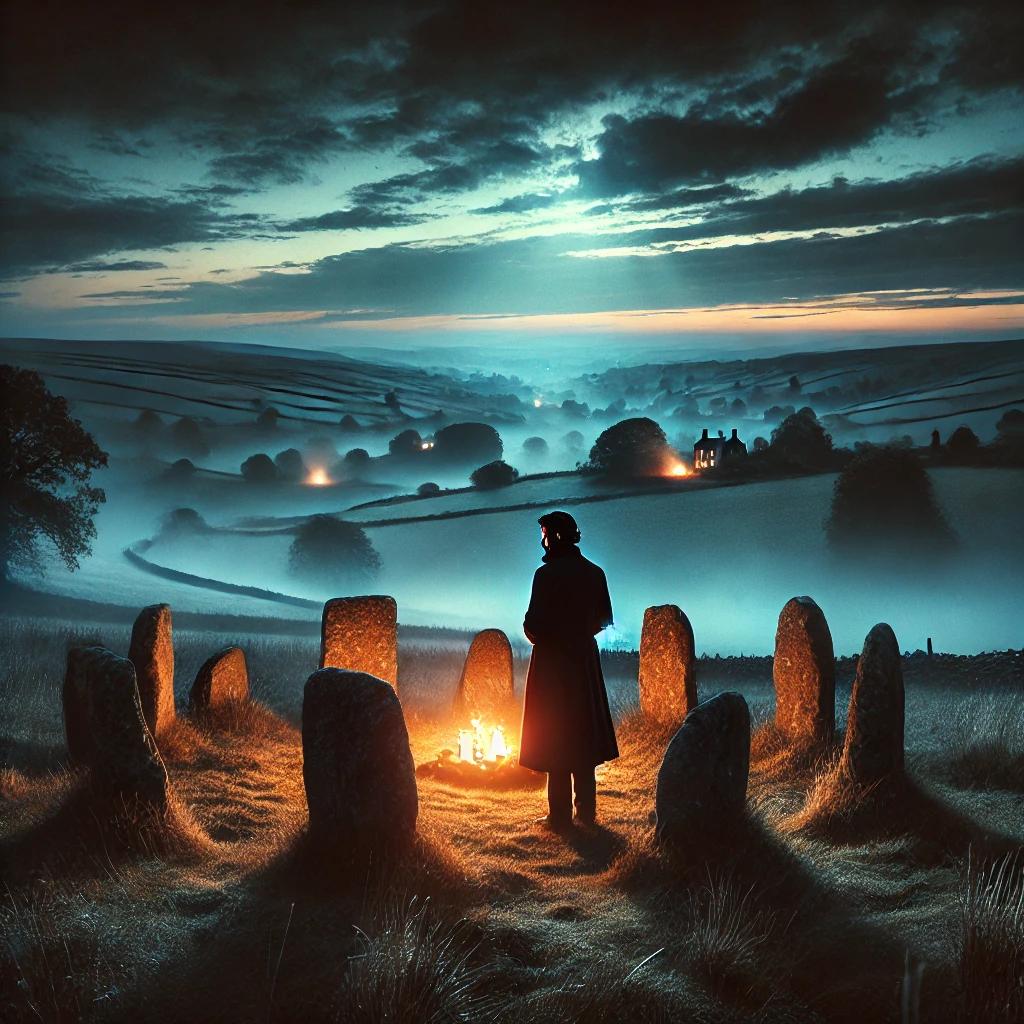
In The Return of the Native, Hardy sets the opening on Bonfire Night (November 5th), a direct descendant of Samhain, the Celtic festival marking the end of the harvest and the arrival of winter. Traditionally, Samhain was a time of crossing—the veil between worlds thinned, and fate worked in unseen ways.
On Egdon Heath, great fires burn against the dark as Eustacia Vye watches, longing for escape. Yet, much like those before her who tried to defy the old ways, she is trapped by forces she cannot control.
Why this matters:
- Samhain signals the death of the old and the start of the dark half of the year.
- Eustacia fights against inevitability, but Egdon Heath—unchanging, eternal—ensnares her like a force of nature.
- Hardy paints the heath as more than landscape; it is a presence, watching and waiting.
Hardy’s placement of firelit rituals at the novel’s opening mirrors Samhain’s themes of fate and the inability to outrun destiny.
The Summer Solstice and Hubris: The Mayor of Casterbridge ☀️⚖️
Michael Henchard’s story begins in midsummer, possibly near the Summer Solstice (Litha, June 21st). The solstice represents the peak of power—when the sun is at its highest before beginning its inevitable descent.
At that peak, Henchard makes his greatest mistake, selling his wife in a drunken act of hubris. He is, in many ways, a figure of tragic folklore—one who reaches too high and must fall.
Why this matters:
- The solstice marks the turning point between abundance and decline.
- Henchard’s rise and fall is as inevitable as the fading sun after midsummer.
- His mistake is not just personal—it feels mythic, a man consumed by his own shadow.
Hardy’s choice to set the novel’s pivotal moment at midsummer reinforces the cyclical nature of Henchard’s fate.
Winter and the End of an Era: Under the Greenwood Tree 🎄🔥
Hardy’s gentlest novel, Under the Greenwood Tree, takes place during Yule (Winter Solstice, December 21st), a time of reflection, tradition, and transition. The novel’s central conflict—a traditional village choir being replaced by a modern church organ—mirrors the solstice’s themes of the old yielding to the new.
Why this matters:
- The solstice is about endings and new beginnings—as is the novel.
- The village musicians represent old traditions, fading in the face of progress.
- Unlike Hardy’s tragedies, this novel accepts that change is inevitable, but not always ruinous.
Yule is a time of holding on to light during darkness, much like Hardy’s quiet nostalgia for a vanishing way of life.
Hardy’s Deep Connection to Cycles of Time
As a scholar, I often question why we cling to patterns, why we see fate where others see chance. But in Hardy’s work, I see an undeniable rhythm—his novels move in time with the seasons, with the earth itself.
- Beltane (Tess) → Youth, transition, and the tragedy of fate.
- Samhain (Return of the Native) → Fire, inevitability, and the forces beyond human control.
- Litha (Mayor of Casterbridge) → Power, hubris, and the inescapable fall.
- Yule (Under the Greenwood Tree) → Tradition, change, and the acceptance of fate.
Is this coincidence, or something deeper? Hardy was no mystic—he was a realist, a man of reason. And yet, his novels move with the pulse of the old world, the rhythm of something ancient.
Maybe that’s just human nature. We tell stories not just to entertain, but to impose meaning, to make sense of what we cannot control. Hardy’s landscapes feel alive because they are—his characters don’t just live in time, they are bound to it.
I am still not a believer in fate, but Hardy makes me wonder if, perhaps, there is something to be said for the turning of the wheel after all.
Leave a Reply