
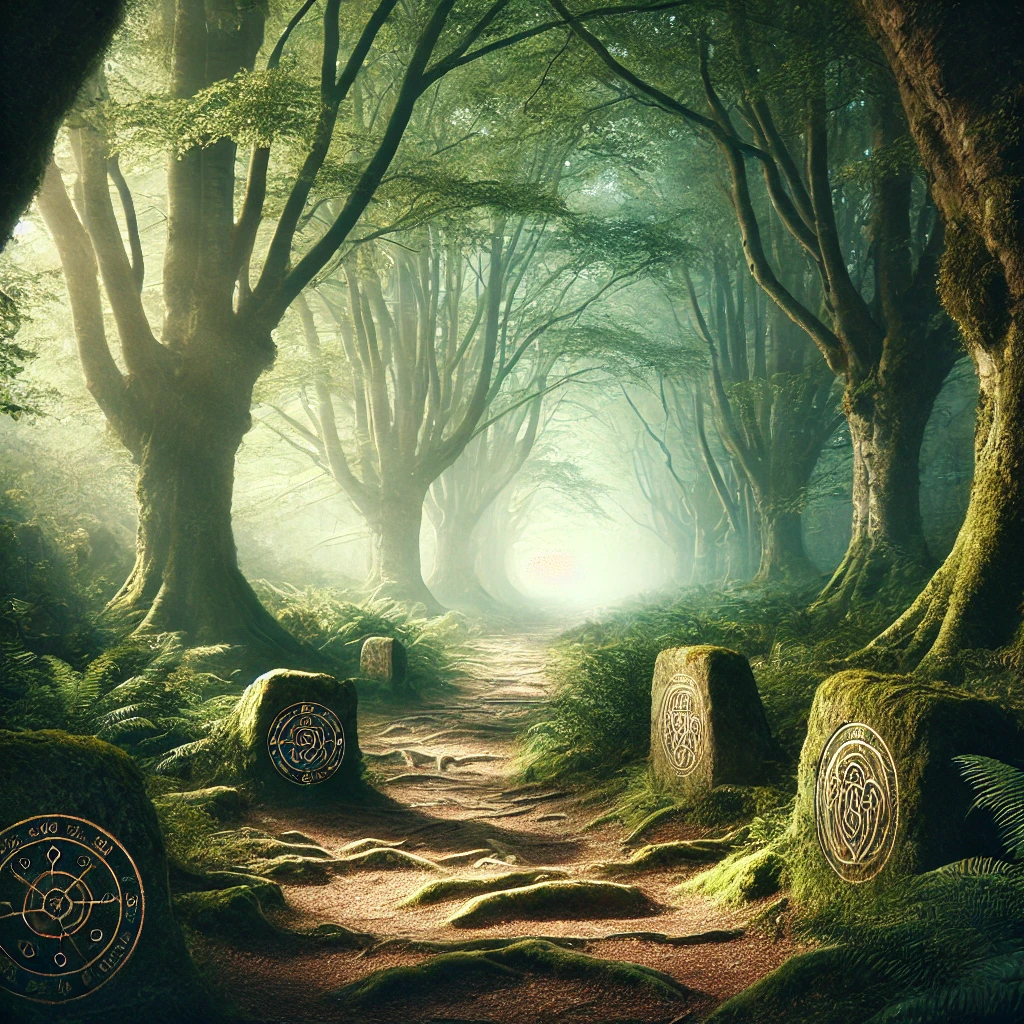
The Dark Night of the Soul—The Journey Through Shadow and Transformation
Chapter Eight
Periods of profound inner turmoil, often characterised by feelings of abandonment, existential despair, and spiritual desolation, are essential stages in personal and spiritual growth.
Lillian Hartley
The mystical and transformative journey of the soul is often accompanied by what many spiritual traditions have termed the “dark night of the soul.” This experience, characterised by profound inner turmoil, a sense of abandonment by the divine, and deep questioning of meaning, is not just a moment of emotional despair. Instead, it represents a vital step in the soul’s evolution—a passage through darkness that ultimately leads to a more integrated and authentic self. In this chapter, we explore the symbolic significance of the dark night, how it manifests in our psychological and spiritual lives, and why embracing this shadow is key to personal and spiritual transformation.
William James and His Dark Night of the Soul
The eminent psychologist and philosopher William James grappled with his dark night of the soul during his lifetime. In his early thirties, James experienced a profound personal crisis marked by deep depression, uncertainty about his future, and an overwhelming sense of existential dread. His writings from this period, particularly in *The Varieties of Religious Experience*, reveal the extent of his inner turmoil. James called this experience “soul sickness,” a spiritual and psychological desolation where he felt cut off from any sense of meaning or purpose. James’s crisis was not just about individual suffering but was also a profound confrontation with the fragility of human existence itself.
In his later reflections, James would describe his journey as emblematic of the “sick soul”—those individuals who experience life as a burden, often filled with melancholy and doubt. James’s encounter with the dark night shaped his intellectual trajectory, leading him to develop a philosophy acknowledging the importance of faith and will in overcoming personal crises. In his essay *The Will to Believe*, James argued that faith—in life, meaning, and something larger than the self—was not about intellectual certainty but a leap of will. This leap allowed him to move forward, not by resolving his inner conflict, but by accepting the mystery and ambiguity of life. James’s dark night became a crucible for his intellectual and spiritual awakening, a theme that would resonate throughout his later work.
In *Sick Souls, Healthy Minds*, John Kaag offers an insightful reflection on James’s personal struggles with despair and the philosophical development that arose from these experiences. Kaag shows how James’s confrontation with his darkness influenced his later work on pragmatism, where belief and action become intertwined. James’s realisation that despair could not be “solved” but must be worked through illuminates how the dark night is not an experience that one escapes from but one that transforms the individual from within.
Mystics and the Dark Night of the Soul
James’s struggles are part of a more extensive, profoundly human experience that mystics across cultures and centuries have articulated. As described by mystics such as St. Teresa of Ávila, St. John of the Cross, and Julian of Norwich, the dark night of the soul involves a profound sense of divine absence. Yet through this experience, mystics often reach more profound spiritual understanding and transformation. These figures understood that the dark night is not merely an ordeal to be endured but a passage that, if embraced, leads to a deeper connection with the divine and the self.
St. Teresa of Ávila: The Interior Castle and Divine Absence
One of the most famous accounts of mystical suffering comes from St. Teresa of Ávila, a 16th-century Spanish mystic. In her seminal work *The Interior Castle*, Teresa describes her spiritual journey as a progression through different stages of the soul, culminating in union with God. However, this union was preceded by intense periods of spiritual desolation and suffering. Teresa often felt abandoned by God and experienced what she called a “spiritual dryness” that left her doubting her faith and purpose.
Teresa’s response to this suffering was one of perseverance. She embraced her dark night as a necessary stage of purification, a process that deepened her relationship with the divine. She believed that the absence of God during these periods was not a punishment but an invitation to greater intimacy, where the soul was tested and refined. By surrendering to this process, Teresa ultimately found her way to a profound sense of divine presence and mystical union, emerging from her darkness with newfound clarity and strength.
St. John of the Cross: The Ascent of Mount Carmel
St. John of the Cross, a contemporary of Teresa, also wrote extensively about the dark night of the soul. In his works *The Ascent of Mount Carmel* and *Dark Night of the Soul*, John describes the dark night as a time of purgation, where the soul must confront its attachments, desires, and illusions. John himself endured a period of imprisonment by fellow monks who opposed his reforms, during which he suffered both physically and spiritually. His dark night was not only an internal struggle but also a literal ordeal of isolation and pain.
For John, the dark night was essential for spiritual transformation. It was a period during which the soul was stripped of its attachments to worldly things and false notions of God. He believed this suffering was a purification process during which the soul was prepared to receive the divine light more fully. John’s writings emphasise the importance of surrendering to this painful process, trusting that it ultimately leads to union with God.
Julian of Norwich: Visions Amidst Suffering
Another mystic who faced profound suffering was Julian of Norwich, a 14th-century English anchoress. Julian experienced severe illness, during which she had visions that she later recorded in her work *Revelations of Divine Love*. Despite the physical and emotional anguish she endured, Julian found solace in the belief that her suffering had a divine purpose. Her visions revealed a God of unconditional love, and she famously declared, “All shall be well, and all shall be well, and all manner of things shall be well.”
Julian’s response to her suffering was one of acceptance. Rather than seeking to escape her pain, she embraced it as a part of her spiritual journey. Her faith allowed her to see beyond her immediate suffering to a greater divine plan, where even the darkest moments had meaning and purpose. For Julian, the dark night was not a punishment but an invitation to deeper trust in God’s love.
Thomas Moore’s *Dark Nights of the Soul*
In *Dark Nights of the Soul*, Thomas Moore brings the ancient understanding of the dark night into the modern world, offering a psychological and existential perspective on this deep and transformative experience. Moore emphasises that dark nights are not merely times of depression or emotional difficulty but spiritual and psychological passages through which the soul must travel. Like William James and the mystics, Moore’s work recognises that the dark night represents a moment of profound crisis, where the individual is invited to confront the deepest parts of themselves and emerge transformed.
Moore acknowledges the pain and discomfort accompanying these periods, noting that modern life often seeks to avoid such darkness at all costs. We live in a culture that prizes happiness, success, and emotional stability, leaving little room for suffering and introspection. However, Moore argues that the soul requires these periods of darkness to grow and evolve. He suggests that dark nights often occur during significant life transitions—grief, loss, ageing, or profound change—and that they allow the soul to shed its old skin and emerge renewed.
For Moore, the dark night is not something to be fixed or avoided but to be embraced. Like St. Teresa or St. John of the Cross, Moore sees the dark night as a necessary part of the soul’s journey. It strips away illusions and forces us to confront the deeper questions of our existence. This confrontation with the unknown, the mysterious, and the painful is what ultimately leads to transformation. Moore believes that without these dark nights, the soul would stagnate, never reaching its full potential.
Liz Greene: Astrology and the Dark Night
In *The Astrology of Fate* and *Astrological Neptune and the Quest for Redemption*, astrologer Liz Greene explores the astrological dimensions of the dark night of the soul, mainly through the lens of fate and the search for meaning. Greene emphasises that astrology offers insight into the soul’s journey through periods of darkness, primarily when planets like Saturn, Pluto, and Neptune are prominent in a person’s chart. These planets, often associated with challenges and suffering, represent transformative forces that push the individual toward deeper self-understanding.
For instance, Saturn’s role in astrology mirrors the experience of the dark night. Known as the planet of limitation, boundaries, and lessons, Saturn’s transits often correspond with periods of inner struggle and external hardship. However, Saturn also represents the potential for mastery and wisdom through endurance. Similarly, Pluto, the planet of death, rebirth, and transformation, correlates with the soul’s descent into darkness before emerging anew. These planetary archetypes reflect the same processes of purification and renewal described by the mystics.
In *Astrological Neptune and the Quest for Redemption*, Greene explores Neptune’s role in the soul’s search for spiritual meaning and the yearning for transcendence. Neptune is often associated with mystical experiences, illusions, and the dissolving of boundaries, and it plays a critical role in guiding individuals through the dark night of the soul. Neptune’s influence can lead to feelings of confusion, loss of direction, and even disillusionment. Still, it also provides the opportunity for a deeper connection to the divine and the dissolution of the ego.
Greene’s work echoes the themes found in the writings of William James, Thomas Moore, and the mystics. She emphasises that the dark night is not a punishment but an essential stage in the soul’s journey. It forces individuals to confront their deepest fears and attachments, leading to spiritual and psychological transformation.
The Shadow and the Dark Night
Carl Jung’s psychological exploration of the shadow—the unconscious part of ourselves that contains all the traits, emotions, and desires we have rejected—mirrors the mystical concept of the dark night of the soul, where the individual encounters their deepest, most hidden fears and unacknowledged parts. Jung argued that confronting the shadow is essential for individuation, the process of becoming whole. The dark night can be understood as a confrontation with the shadow, where individuals are forced to face the aspects of themselves they have denied or repressed, to achieve inner transformation.
In *The Red Book*, Jung vividly illustrates this process through his encounters with archetypal figures representing different aspects of his unconscious. One such figure is *The Red One*, a devil-like character Jung meets in one of his visions. The Red One represents everything Jung had rejected—his personality’s chaotic, instinctual, and morally ambiguous aspects. Jung’s dialogue with The Red One is a striking example of how engaging with the shadow can be unsettling and challenging. In this exchange, Jung is forced to confront his moral judgments and the discomfort of acknowledging that aspects of the “evil” he had perceived outside himself also existed within him.
Jung’s concept of *active imagination*—a method of consciously entering into dialogue with the figures and images that arise from the unconscious—provides a powerful tool for navigating the dark night of the soul. In *The Red Book*, Jung frequently employed active imagination to interact with archetypal figures such as *Philemon*, *Elijah*, and *Salome*. These figures emerged from his unconscious as guides and interlocutors, helping him explore his psyche’s depths. For example, in his encounters with *Philemon*, who appears as a wise old man with a profound connection to the collective unconscious, Jung is guided through profound insights about the nature of wisdom, spirituality, and the tension between the conscious mind and the unconscious.
Similarly, the confrontation with *The Serpent* is another powerful example from *The Red Book* that demonstrates Jung’s shadow work. The Serpent symbolises primal instincts and the psyche’s darker, more destructive aspects. In the vision, Jung initially recoils from the Serpent, seeing it as dangerous and foreign. However, through dialogue and engagement with the figure, Jung understands that the Serpent, much like the shadow, is a necessary part of his psychic wholeness. By integrating its lessons, Jung can move toward a more complete sense of self, embracing the light and the dark, instinctual forces within.
The journey toward individuation that Jung describes is deeply tied to the concept of the *nigredo* in alchemy, where the individual must endure a psychological “blackening” or dissolution, akin to the dark night before any renewal or transformation can occur. This *nigredo* is represented in *The Red Book* by Jung’s descent into his inner world, where he confronts madness, death, and chaos. It is only by facing these difficult, often terrifying experiences that Jung can emerge transformed, having gained a deeper understanding of his true self.
By using active imagination to engage with the shadow and other archetypal figures, Jung created a framework for others to confront their own dark nights of the soul. For instance, an individual grappling with feelings of inadequacy or self-loathing might use active imagination to dialogue with a shadow figure that embodies these emotions. Through this process, they could understand that these feelings, while painful, are part of a larger process of psychological integration. Rather than rejecting or suppressing these emotions, they can be acknowledged and brought into consciousness, leading to healing and a sense of wholeness.
Thus, Jung’s exploration of the shadow and his technique of active imagination offers a profound way to navigate the dark night of the soul. The dialogue with the shadow and other unconscious figures is not merely a confrontation with darkness; it is an opportunity for transformation, a chance to bring light to the hidden corners of the psyche and to achieve the psychological wholeness that Jung saw as the ultimate goal of individuation. Through this process, we can move beyond the superficial layers of the self and engage with the deeper, more authentic aspects of our being.
The Shadow of Perfection: Modern Struggles with the Dark Night of the Soul
In Selfie: How We Became So Self-Obsessed and What It’s Doing to Us, Will Storr doesn’t explicitly discuss the concept of the “dark night of the soul” as it appears in mystical or religious traditions. However, his exploration of the modern obsession with self-perfection reveals a parallel to this concept in contemporary life. Storr examines how the relentless pursuit of personal success and self-image perfection—fueled by social media, self-help ideologies, and neoliberalism—leads to widespread emotional suffering, such as anxiety, depression, and burnout. This mirrors the existential despair that mystics like St. John of the Cross described in their dark nights, where they felt disconnected from the divine and were forced to confront the limitations of their ego-driven desires.
The modern crisis Storr describes can be understood as a psychological equivalent to the dark night: a moment when individuals face the painful realisation that the idealised, perfect self they strive to project is ultimately illusory and unattainable. This form of emotional suffering can resemble a spiritual reckoning, where one’s deeply ingrained values and aspirations must be dismantled to make room for more authentic self-awareness and growth.
As noted above, in The Varieties of Religious Experience, William James discusses his emotional crises, which can be likened to a dark night of the soul. James experienced intense periods of doubt and despair, during which he grappled with existential fears and uncertainties about life and his worth. Eventually, through a process he described as a “conversion experience,” James achieved a more stable, integrated sense of self, emerging with a deeper understanding of life’s spiritual and emotional dimensions. Storr’s modern critique reflects this same struggle, as people today, like James, face existential crises, but often without the spiritual or philosophical frameworks to navigate them.
By confronting the dark aspects of the self—the shadow, the failures, and the disillusionments—both James and Storr suggest that individuals can move toward greater emotional health and authenticity. Whether through religious experience, as James describes, or through a modern reevaluation of society’s impossible standards, as Storr urges, the confrontation with the shadow, much like the dark night of the soul, can be a path to emotional and psychological wholeness.
Conclusion: Embracing the Darkness
The night of the soul is not an easy journey. It challenges our deepest assumptions about ourselves, our spirituality, and our world. But as the mystics, psychologists, and philosophers remind us, this darkness is necessary for transformation. Whether it manifests as a period of deep personal suffering, a crisis of faith, or a confrontation with the unconscious, the dark night serves as a crucible for the soul’s evolution.
Thomas Moore’s *Dark Nights of the Soul* offers us a modern understanding of this ancient experience, reminding us that the soul requires darkness to grow. The mystics teach us that this suffering is a passage, not a destination. William James and Carl Jung show us that confrontation with the shadow and the unknown is essential for personal and spiritual wholeness.
Through the dark night, we are invited to relinquish our illusions, confront our shadows, and emerge into the light of a new understanding. This rebirth that follows the dark night reveals the soul’s resilience and strength, reminding us that darkness is not something to be feared but embraced as a necessary stage in the soul’s journey toward wholeness.
—
**Sources:**
1. William James, *The Varieties of Religious Experience* (New York: Penguin Classics, 1985), 142-163.
2. John Kaag, *Sick Souls, Healthy Minds: How William James Can Save Your Life* (Princeton: Princeton University Press, 2020), 53-68.
3. Thomas Moore, *Dark Nights of the Soul: A Guide to Finding Your Way Through Life’s Ordeals* (New York: Gotham Books, 2004), 87-102.
4. St. Teresa of Ávila, *The Interior Castle*, trans. E. Allison Peers (New York: Image Books, 1989), 112-133.
5. St. John of the Cross, *Dark Night of the Soul*, trans. E. Allison Peers (New York: Image Books, 1959), 93-107.
6. Julian of Norwich, *Revelations of Divine Love*, trans. Elizabeth Spearing (London: Penguin Classics, 1998), 76-92.
7. Carl Jung, *Memories, Dreams, Reflections* (New York: Vintage, 1989), 254-270.
8. Liz Greene, *The Astrology of Fate* (York Beach: Weiser Books, 1984), 133-154.
9. Liz Greene, *Astrological Neptune and the Quest for Redemption* (London: Weiser Books, 2000), 67-89.
Leave a Reply